Newsletter Issue 1
[embeddoc url=”http://www.edite.eu/wp-content/uploads/2017/11/EDiTE-Newsletter-Issue-1.pdf” download=”all”]
The first issue of the EDiTE newsletter, published on 29 September 2017

[embeddoc url=”http://www.edite.eu/wp-content/uploads/2017/11/EDiTE-Newsletter-Issue-1.pdf” download=”all”]
The first issue of the EDiTE newsletter, published on 29 September 2017
[embeddoc url=”http://www.edite.eu/wp-content/uploads/2017/11/Kovacs-and-Tinoca-2017.pdf” download=”all”]
Calibrating the right developmental approach when introducing a new innovative intervention is a complex task for governments, and schools alike. The new Projeto-Piloto de Inovação Pedagógica offers six schools an opportunity to break most of the rules in order to unfreeze pedagogical and curricular traditions and open the “black box” classrooms. The paper examines what this intervention means for the Ministry and for the schools involved and reflects on its prospected outcomes.
[embeddoc url=”http://www.edite.eu/wp-content/uploads/2017/11/ECER-HundrED-HK-v2.pptx” download=”all” viewer=”microsoft”]
Presentation by Helena Kovacs during ECER 2017 in Copenhagen, Denmark. The presentation was part of the EDiTE symposium: ‘The European Doctorate in Teacher Education: Transnational Perspectives of Teacher Learning in an Emerging Europe’
[embeddoc url=”http://www.edite.eu/wp-content/uploads/2017/09/EPTE_online.pdf” download=”all”]
In this volume you will find both individually and collectively written papers by the EDiTE researchers that reflect the results of the first year of their research within the EDiTE framework. PART I of the volume contains three collectively elaborated analyses of the three components of the EDiTE theme, Transformative Teacher Learning for Better Student Learning within an Emerging European Context. These papers are based on a complex and challenging joint effort of international teams of EDiTE researchers, who over the course of several months carried on an internal survey, analysis, and discussion concerning the common understanding of the EDiTE research theme. In the PART II the authors were given freedom in choosing themes and co-authors of their papers. The effect is a rich mosaic of focus and scope of interests that aptly mirror the diversity of the EDiTE community.
[embeddoc url=”http://www.edite.eu/wp-content/uploads/2017/11/Phenomenon-based-teaching-and-learning-through-the-pedagogical-lenses-of-phenomenology_The-recent-curriculum-reform-in-Finland.pdf” download=”all”]
Abstract: This paper aims to explore the phenomenon-based approach in teaching and learning, through the pedagogical lenses of phenomenology, the philosophy of phenomena. The phenomenon-based approach has informed the new core curriculum for basic education in Finland, which has officially introduced multidisciplinary learning modules as periods of phenomenon-based project studies. In this paper, we discuss how the specific approach is integrated into the curriculum, its theoretical grounding and its connections to constructivism. We also explore its implications for teaching and learning from a phenomenological perspective. The paper concludes that the responsive relation between teaching and learning is essential when our purpose is educational. Students are part of the learning process, but they do not necessarily initiate it; similarly, teachers cannot fully instruct it. Thus, we need to make meaning of the space between teaching and learning, in an effort to reclaim learning for pedagogy.
[embeddoc url=”http://www.edite.eu/wp-content/uploads/2017/11/ECER-2017.pptx” download=”all” viewer=”microsoft”]
Presentation by UIBK ESR Vasileios Symeonidis during ECER 2017 in Copenhagen, Denmark. The presentation was part of the EDiTE symposium: ‘The European Doctorate in Teacher Education: Transnational Perspectives of Teacher Learning in an Emerging Europe’
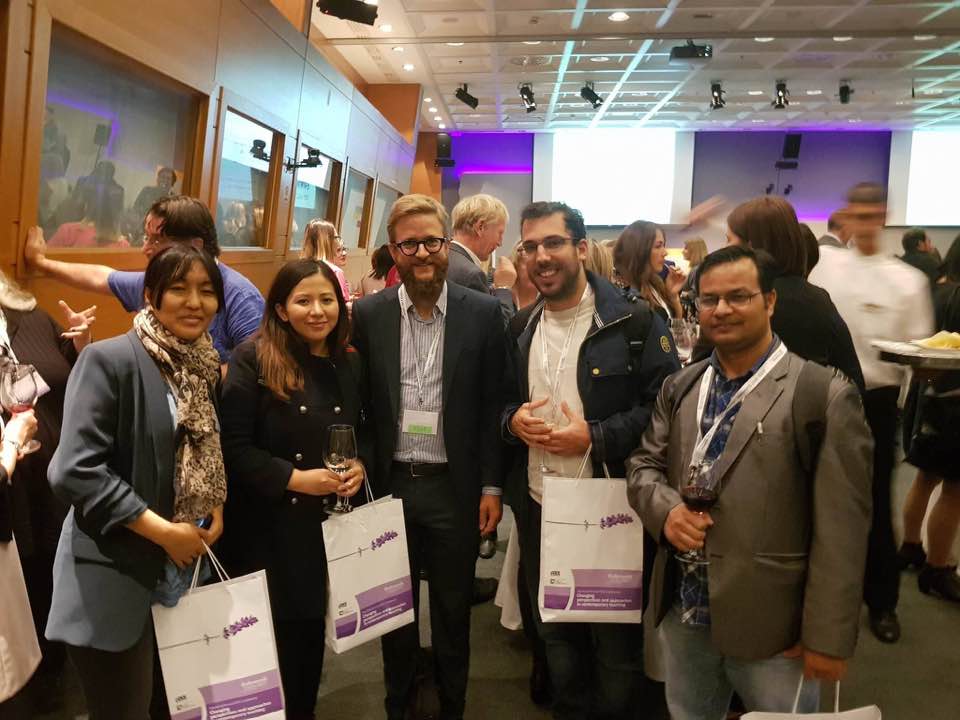
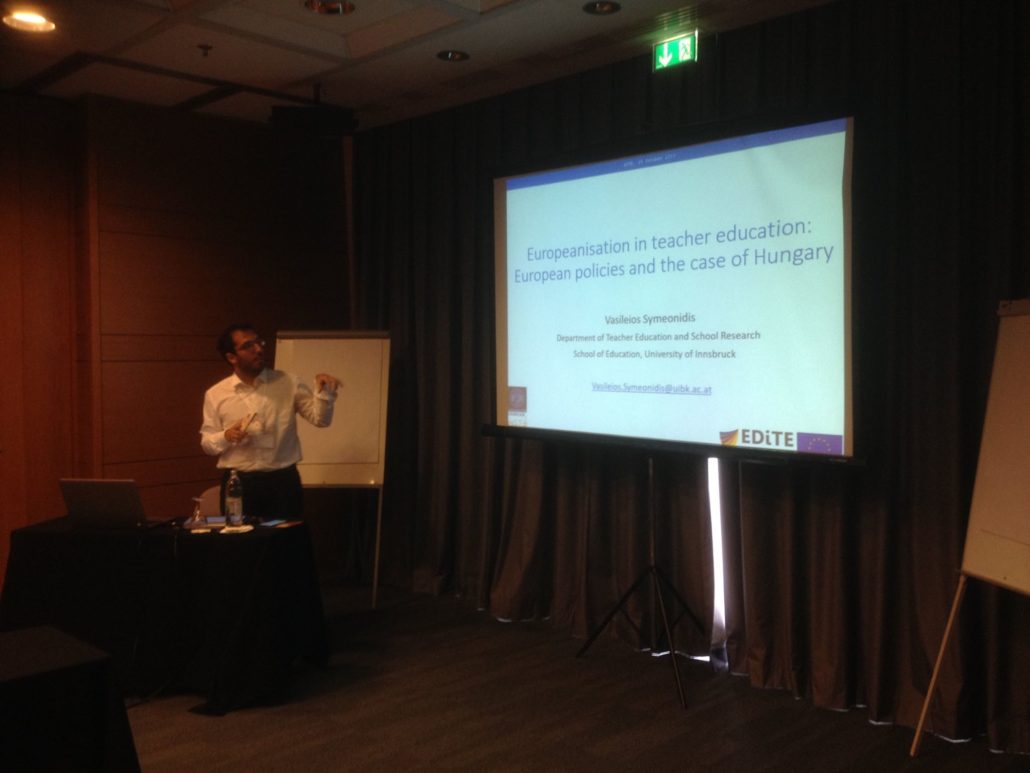
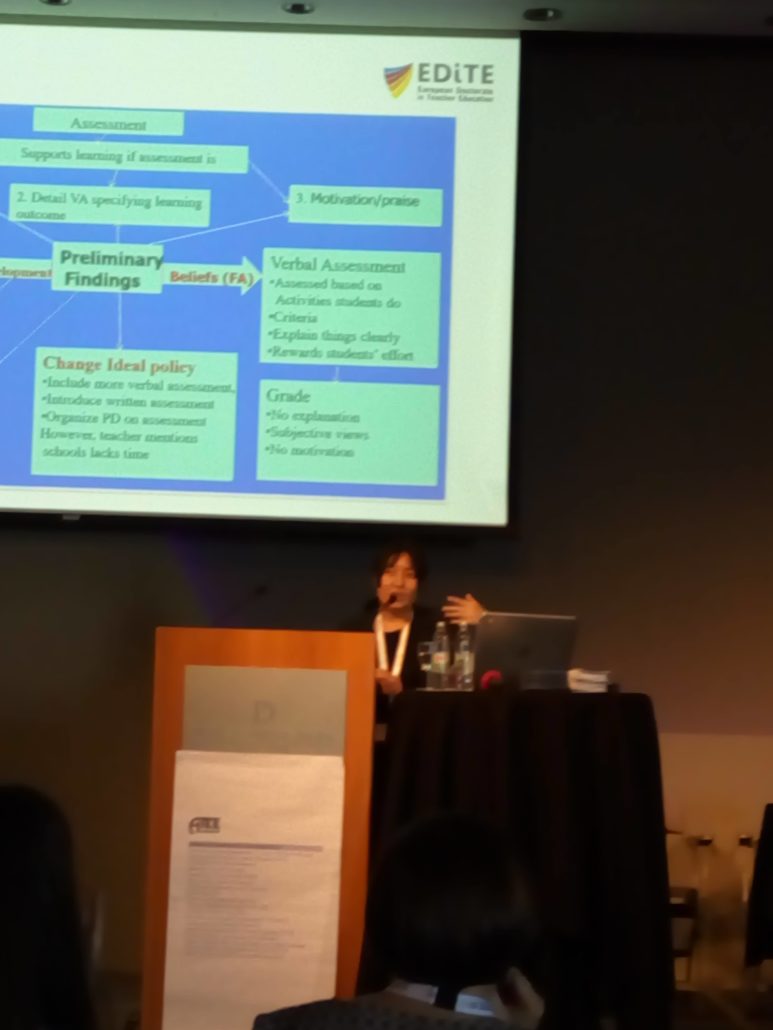
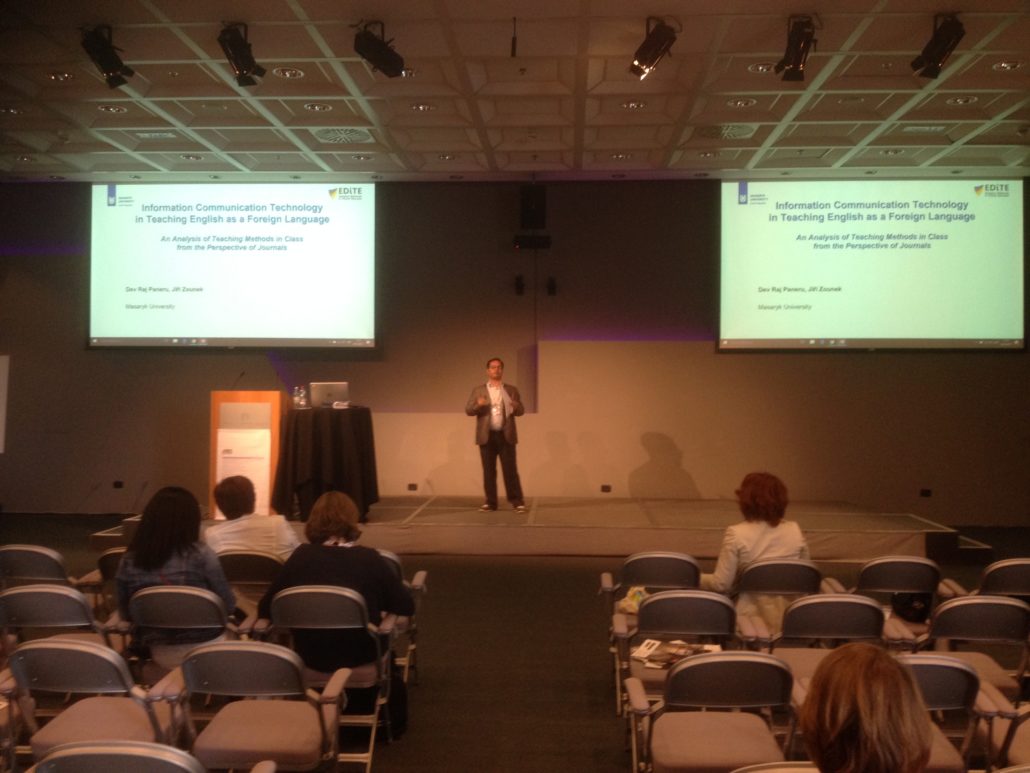
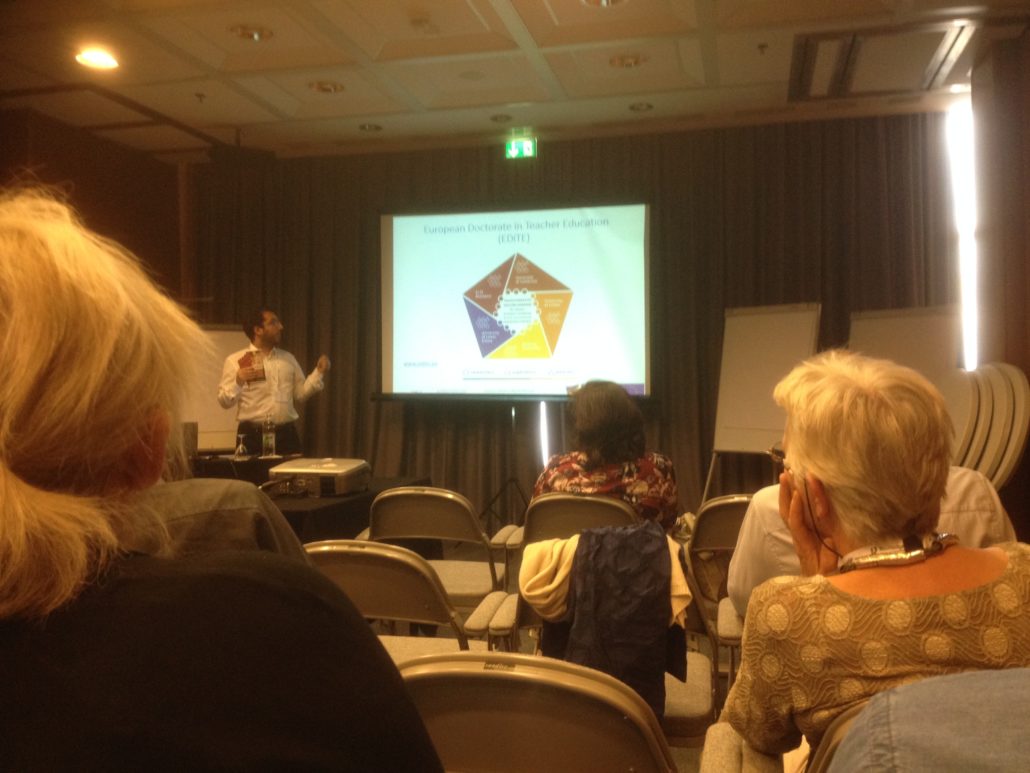
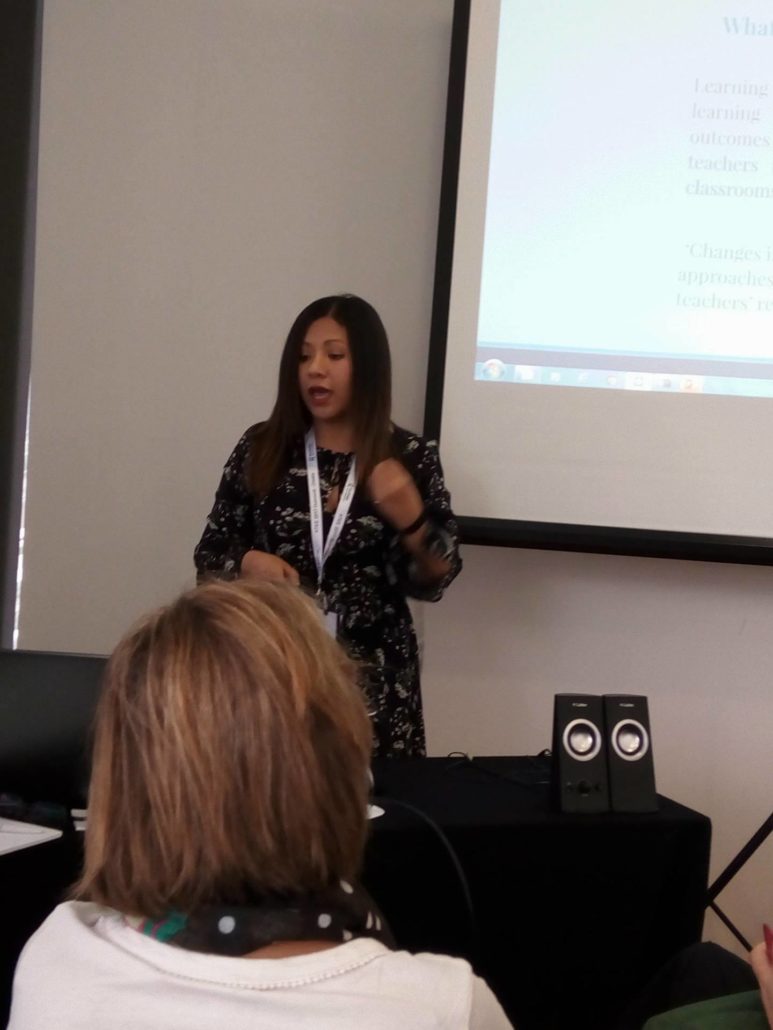
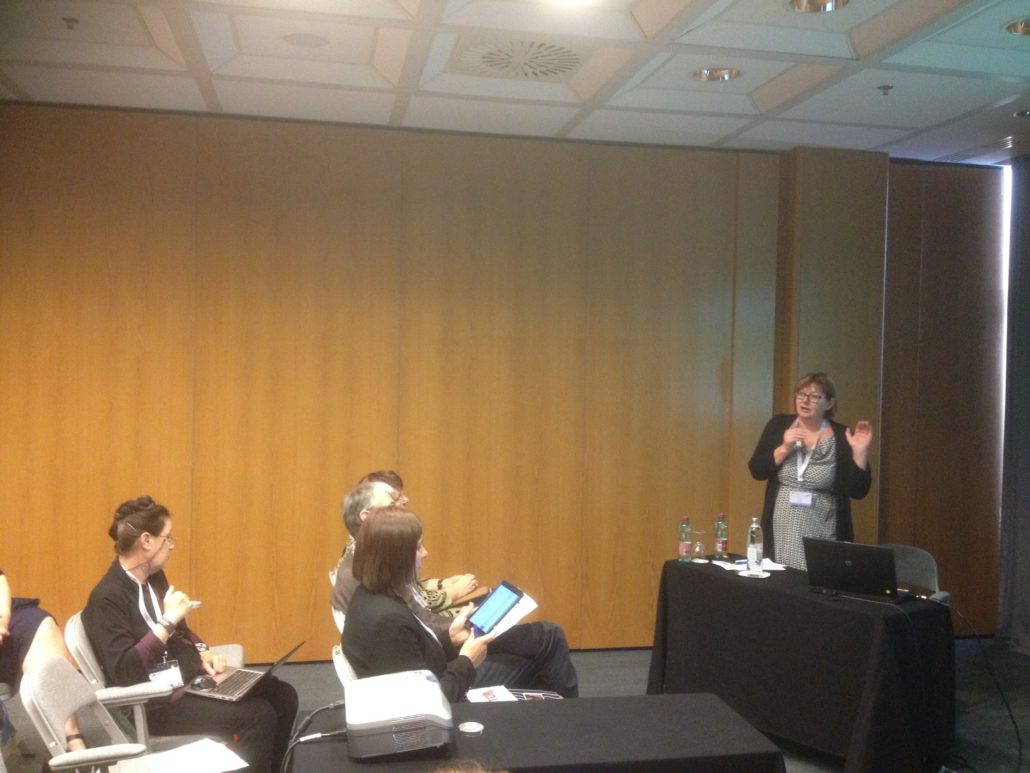
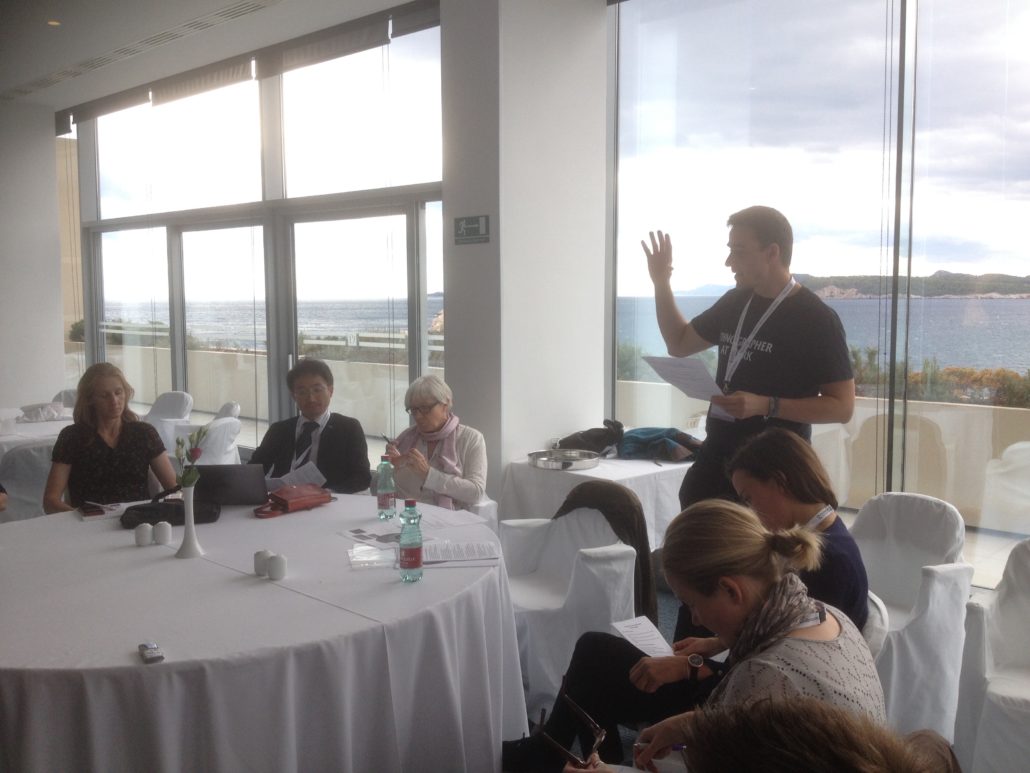
One-third of the EDiTE Early Stage Researchers have travelled to Dubrovnik, Croatia, from 23 to 25 October 2017, joined by two EDiTE supervisors Erika Kopp and György Mészáros. And it is not difficult to discover why: the event was 42nd ATEE Annual Conference on teacher education focused to capture the main theme Changing Perspectives and Approaches in Contemporary Teaching. The conference was organized as a continuation of the research dissemination and outreach event, aimed to provide teachers, teacher educators and researchers an opportunity to promote teacher learning, quality enhancement and change-making for the overall improvement of education.
The other main purpose of the conference was to promote research development communities by gathering a diverse and global list of participants and develop a progressive research-oriented teacher learning campaign geared to enhancing quality in education by means of research-based knowledge supporting teachers’ professional development.
The 42nd annual ATEE Conference was organized by the Faculty of Education, University of Osijek, Croatia, and it invited approximately 400 participants from more than 45 countries. With well-articulated sub-themes constituted to addressing changing perspectives and approaches in contemporary teaching, the conference was designed in a way that could provide plenty of exposure for each member to take active participation in most of the events throughout. The conference highlights included a key-note speech of Marylin Cohran-Smith on Democratic accountability for teacher education: Now more than ever as well as the insights of European dimension in education in Croatia: A long way to go and a speech on Changing teaching practices through creating communities of critical friends and action researchers.
In addition to the main conference presentations, discussions, symposiums and work groups, it was noteworthy that the ATEE executives showed a soulful engagement on promotion, formation and expansion of the research development communities (RDCs) formulated on diverse themes and different areas of teacher education like: European teacher education, digital competence in teacher education, inclusion and related issues in teacher education, innovation and learning teacher education and so on. As the research presentations on all levels seemed remarkably competent and demonstrated high academic standard in quality, it was obvious that the organizing committee had done their best in giving all the necessary efforts in bringing global thoughts and research experiences on teacher education, teaching and learning together with excellent decision processes, this providing a great exposure to novice and early career researchers and practitioners striving to enhancing innovation and innovative turn in their professional career in contemporary teaching.

To have the European Network on Teacher Education Policies (ENTEP) annual conference held in Lisbon last week, was not only significant but also symbolic. ENTEP was constituted in May 2000 at the inaugural conference in Algarve following the proposal put forward by Guilherme d’Oliveira Martins, then the Portuguese Minister of Education. The proposal addressed other policy-makers and ministerial colleagues in the EU Member States with the purpose to develop the political dimension of teacher education in Europe. Thus, the first chair of ENTEP was Prof. Bártolo Paiva Campos.
As Mr Martins recalled in opening the conference in Lisbon, when ENTEP was first established the links between education and changing society was reflected through the work of teachers and their abilities of creating communities in schools that are based on ideas of democracy and underpin the principles of active citizenship.
Last week, on the 19-21 October, the ENTEP took a challenging main topic for a conference titled Evaluation Frameworks for Teachers and Schools. This overarching theme connected experts and opened up discussions from different perspective and the conversations were introduced by a welcome address of Maria Luisa Oliveira, the State Secretary for Education at the Director-General for School Administration of the Portuguese Ministry of Education.
The conference was also attended by some of our Early Stage Researchers, namely Lucie Bucharová and Malte Gregozewski, as well as Inês Alves, the project coordinator of EDiTE at the Institute for Education, University of Lisbon. Along with other participants, EDiTE representatives had the chance to discuss lessons from individual cases, including issues such as greater attention to formative assessment, importance of schools’ self-evaluation for improvement, creation of evaluation frameworks and the role of teachers as employee, technicians and professionals. Some of the conclusions emphasised that a different concept and vision of education inevitably must imply a different framework for assessment.


It is always good to update and expand methodological knowledge in doing research. The EDiTE Early Stage Researchers and their PhD colleagues from the Department of Educational Sciences had a fortunate opportunity to attend a methodological workshop organised by the Masaryk University on October 9 and 10, 2017.
The workshop was facilitated by Professor Angelika Paseka from the University of Hamburg and through their two-day journey the group has covered topics of school development and use of innovations in schools. In particular, the focus was an effective application of focus group discussions as a methodological approach and documentary method in data analysis. Part of the workshop also elaborated on possibilities of extracting metaphors from the participants of the focus groups and techniques of macroscopic and microscopic two-step data analyses. The most interesting detail of the workshop was the idea of five building block of learning, namely Irritations, Resistance, Community of Experience, Experimentation and Search for Language. This input created an intensive exchange of opinions among all participants.
Throughout the two days of workshop the sessions were implemented in an interactive way, in form of group activities and discussions which supported a holistic way of sharing and gaining knowledge. It comes without saying that this methodological workshop made a useful input for the EDiTE researchers as it broadened the horizons of their methodological knowledge and capabilities.
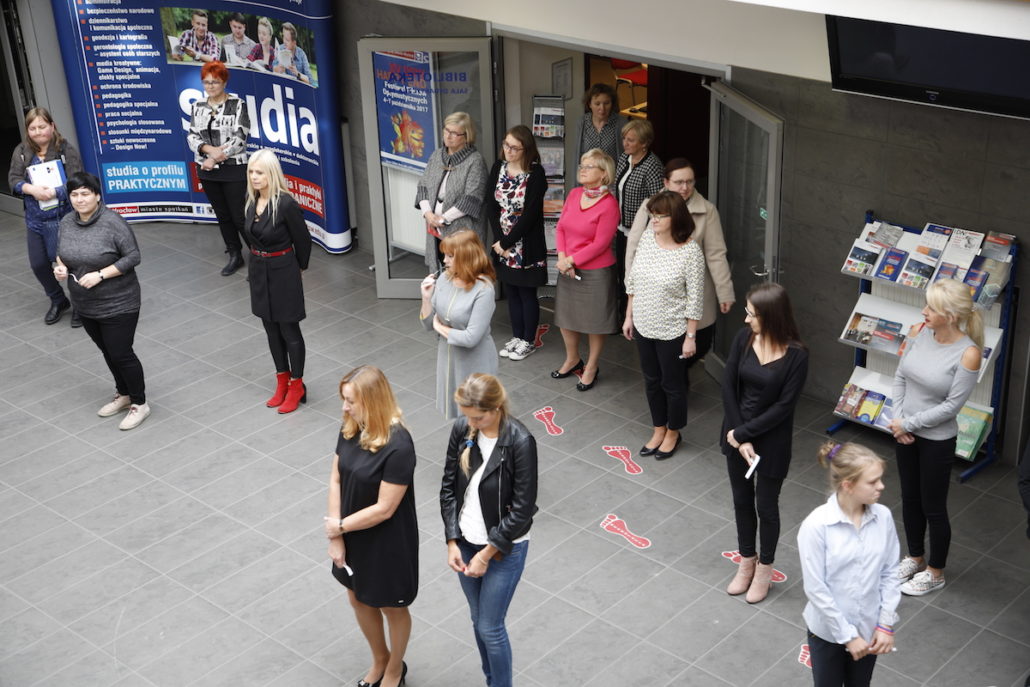
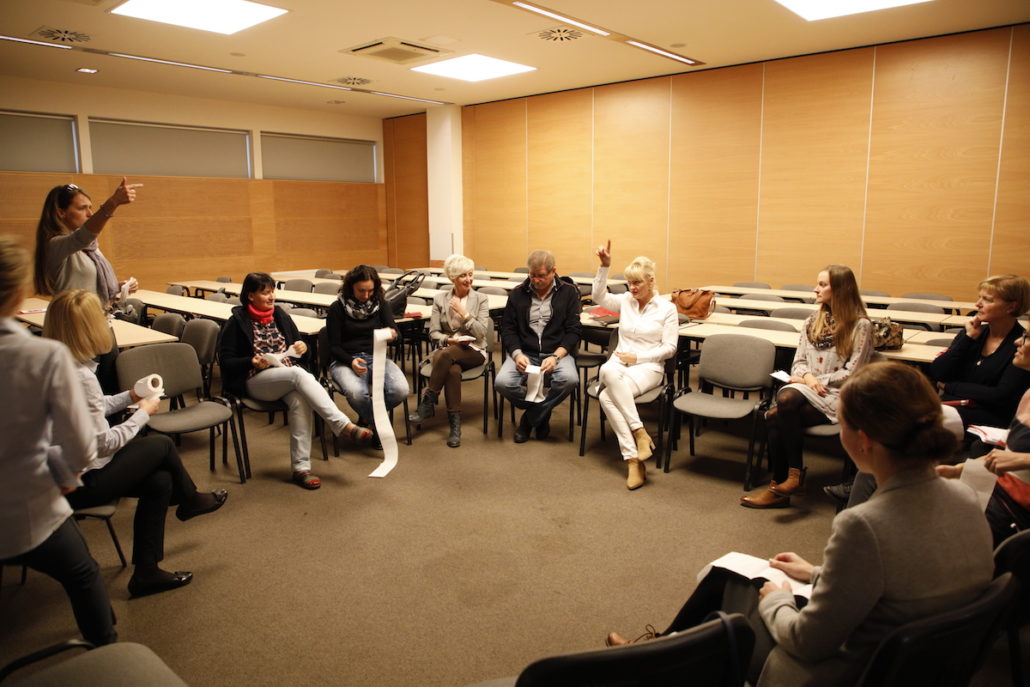
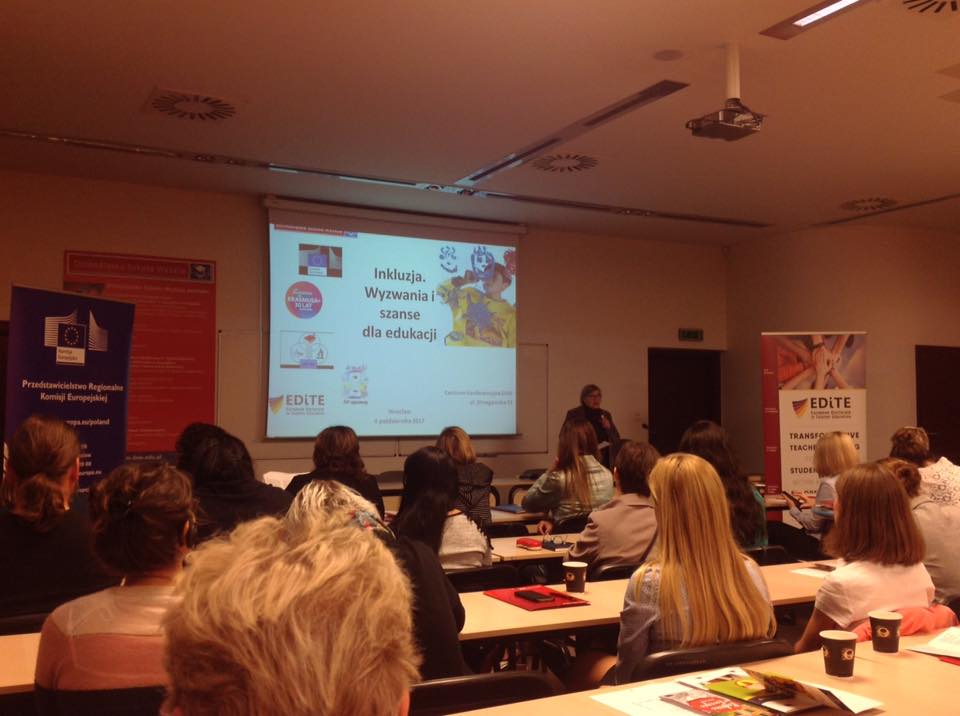
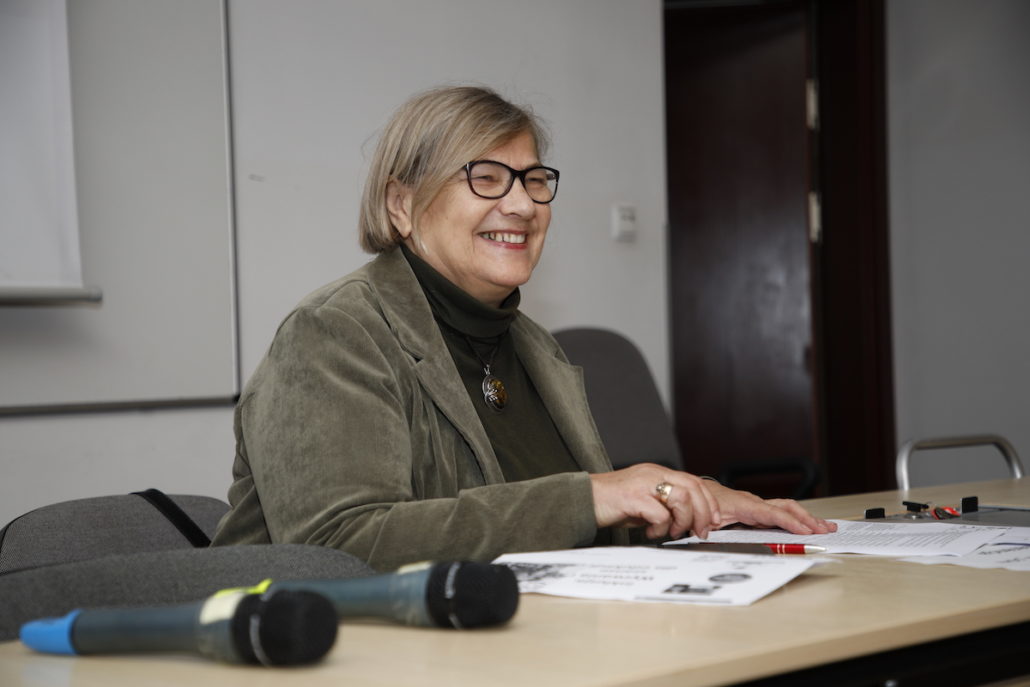
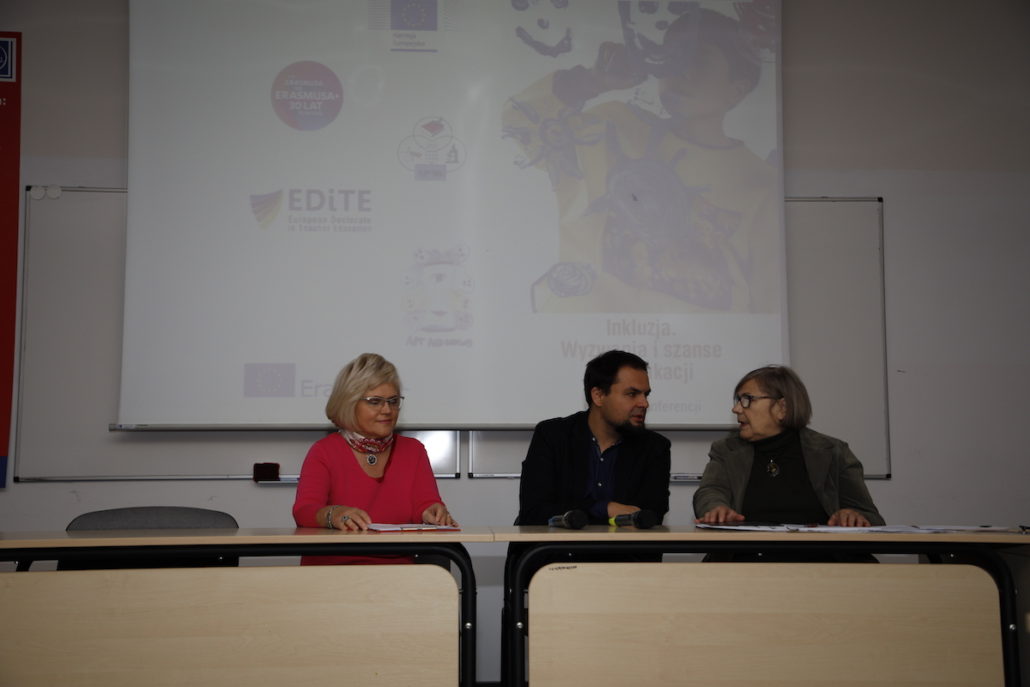
On October 4, 2017, the University of Lower Silesia together with the EDiTE partner institution Stanisław Tołpa Primary School no. 90 in Wroclaw and the European Commission Regional Office hosted a conference for teachers and educators on the challenges and opportunities of inclusion in mainstream education. After the welcome addresses by the Dean of the Faculty of Education Prof. DSW dr hab. Pawel Rudnicki and the Dean for Student Affairs Dr. Urszula Dzikiewicz, the conference was kicked off with an inspirational key note speech by EDiTE supervisor Professor Maria Czerepaniak-Walczak, University of Szczecin, on “School Culture as an Agent and Medium of Respect of the Right to Education”. International guests from Italy, Spain and Romania, participating together with Stanisław Tołpa Primary School no. 90 in the Erasmus+ program Art and Emotions, introduced themselves and presented experiences from their schools with inclusive learning. Throughout the rest of the day, roughly 70 practitioners from schools from all over Wroclaw were able to choose from five different workshops that ran twice for two hours each. The workshops included topics, such as “Counteracting exclusion: Class and school diversity as a challenge” by Ewa Stoecker and The Human Library project introduced by Kamila Prociow. Furthermore, there were workshops dealing with the practice of inclusive education in public schools by Ewa Granat and social inclusion of kids with disabilities as well communication about the topic of disability by Agnieszka Kossowska, author of “Big Issues in Small Heads”. A fifth workshop in English was offered by the Spanish teacher participant, Gracia Sonia Jimenez Vega on the TEI program (peer tutoring) in Spanish education. Translators ensured smooth communication between different language speakers throughout the whole conference day. The event also attracted the interest of the Polish media. In advance, EDiTE supervisor Prof. DSW dr hab. and rector of the University of Lower Silesia, Hana Cervinkova together with the vice-director of primary school No. 90, Malogorzata Gluch, promoted the conference in an interview and informed about the topic of social and educational inclusion. To find out more about the conference schedule please click here, to read a detailed description of the workshops, please click here, if you are interested in Prof. Czerepaniack-Walczak’s speech, you can check it out here.