EDiTE Researchers teaching at Masaryk University

This and previous semester Masaryk University (MU) offered the course “Education and schooling in the 21st century” also offered as “Contemporary Research” in which our researchers: Dev Raj Paneru, Kinley Seden and Deisi Yunga had the opportunity to share the initial outcomes of their research with students of this course and work with them in the Faculty of Arts at MU.

Coordinated by professor Petr Novotný and Ph.D. student  Klára Šlapalová, the EDiTE Early Stage Researchers implemented the course with topics related to teaching, learning and professional development.

This course is one of the classes offered for local and foreign students in the Faculty of Arts and one of its peculiarities is the highly international background of its participants with teachers and students coming from different countries.  This diversity of opinions creates very rich discussions that allow all the participants to learn about diverse education systems and  “teaching and learning” issues from different angles  by addressing key needs of 21st century school.

The integration of digital content, EFL support, and face-to-face traditional classes with a strong reflective component and teacher subjective theory of assessment as key issue to explain and understand schooling needs were the angular stones of this class.

At the end of the semester, the students presented interesting and well developed essays about the topics analyzed in the course getting positive feedback from our ESRs.

Challenges in transnational cooperation and international collaboration committed to transformational change: Cross-sectoral (personal) learnings

Innsbruck-based EDiTE-ESR Malte Gregorzewski was last week away on an EDiTE outreach mission to Mainz (Germany) which is located next to Wiesbaden and Frankfurt (Main). Malte was invited by a member of the German Federal Association for Innovative Educational Initiatives and enjoyed this privilege by introducing EDiTE in an elevator-pitch-alike situation to 90 executes/leadership personnel from the private sector in Germany and abroad convincing many of them to attend his workshop about “Challenges in transnational cooperation and international collaboration committed to transformational change: Cross-sectoral (personal) learnings”. The workshop aimed at introducing EDiTE more thouroughly than in the pitch and was carefully designed to enable a structured exchange about the participant’s very own personal drivers for transfomational change within their organization. In the second and final step Malte´s goal was to understand more how leaders from the private sector would tackle the obstacles and challenges of a project bringing transformational change on a transnational -European- level to national public sector institutions.
On the one hand the workshop clearly promoted EDiTE to the non-academic field, on the other hand Malte gained some insights about how the participating leaders would deal with challenging transformational processes. From their perspectives and within their framework of responsibility, it proves to be crucial to align and – within the duration of the project – live up to aims and goals of each particular institution towards a common vision and agreed mission; to hold every stakeholder accountable for its action and – sometimes more important – non-action; to commonly develop growth-mindsets and – last but not least – enact a sense of trust and solidarity amongst each party involved in such an endavour.
The participants were both thankful and happy to have such a deep and meaningful exchange about leadership and transfomational change as well as intensive and thoughtful discussions about personal key success drivers towards the fruitful enactment of the emerging future.


Picture1

EDiTE Virtual Seminar 2018

The EDiTE Virtual Seminar took place between 13-14 March and was organized by the Department of Educational Sciences at Masaryk University, Brno, Czech Republic. The event aimed to improve our ESRs’ research skills while empowering them towards a successful completion of their doctorate programme.

This virtual seminar was attended by nearly fifty people from different universities in seven European countries.

The event consisted of presentations relevant to the research process, with the presentation of topics such as: “how to write a doctoral thesis”, ethics, dissemination of scientific results and life after the Ph.D.

The presenters, Vernon Trafford,  Roman Švaříček, Michal Petr, Monika Sieberová,  Lucie Škarková, Kari Smith, Pat Thomson and Kristýna Vlčková provided the attendees insightful theoretical and practical ideas aimed to support the development of their thesis during the last year of the EDiTE Programme.

Picture1

Blended Learning Course at ELTE


This semester Bachelor and Master students at ELTE could enrol to a blended learning course called The Learning Teacher, and a handful of students did. The course is designed in a way that combines traditional face to face lectures with virtual sessions and online content. The course was first introduced last semester and has been upgraded refined to a more integrated version.

The course is implemented by EDiTE Early-stage researchers Csilla Pesti and Helena Kovacs. The scope of blended learning covers professional development, the teacher learning spectrum, innovation and change as well as experimental use of eduLARP – Live Action Role Play. The lecturers use Slack in combination with GoogleDrive as platforms for online engagement, while for the face to face sessions they mix various methods as group work, exit cards, visual learning charts, role play and situational simulations.

Wieslaw Antosz 1

“Opening Conditions for Possibilities” – Wieslaw Antosz transforms practice with people with intellectual disabilities through the works of Michel Foucault

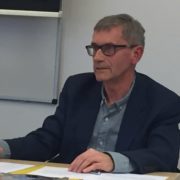
At the University of Lower Silesia, Wieslaw Antosz introduced his doctoral dissertation supervised by EDiTE professor, Lotar Rasinski, Constructing the Subjectivity of People with Intellectual Disabilities from the Perspective of Michel Foucault’s Philosophy to EDiTE students. Dr. Antosz spoke about the deep impact that the works of Michel Foucault, Ludwig Wittgenstein and Chantal Mouffe had on transforming his own practice of working with people with mental and intellectual disabilities. Foucault’s Discipline and Punish, he named as key literature to changing his thinking based on the question of what were the conditions for something to come into being? Foucauldian methodology of archaeology and genealogy made him see the logic of an institution. You needed to look at institutions from the distance, from the outside and investigate in the question of how has that which is become possible, he explained. Resulting from this, he thought of special pedagogy literature as knowledge of what was possible, of how people with disabilities were constructed based on the language that the discipline offered. Therefore, his approach would build on opening conditions for possibilities for people with disabilities. Contextualizing his philosophical work for us, Wieslaw explained that he had opened protected households in which people with intellectual disabilities could live free from the control of non-disabled people. His practice deeply rooted in critical theory, he emphasized, intended to restore the subjectivity of the individual that was impaired by the gaze of the non-disabled onto the disabled body. Wieslaw concluded from his PhD dissertation that what was essential to his practice was to show people with disabilities care for the self instead of suiting imaginations of who and how they should be according to others.

shutterstock_92325316-825x510

EDiTE Lisbon Team Launching BA Module „Educational Issues in Europe”

EDiTE Lisbon team embarked on a new mission this term: introducing a wide array of European perspectives, issues and research topics in the University of Lisbon’s Bachelor programme in Education and Administration. Although long-term courses are usually held only in Portuguese at IEUL, EDiTE Lisbon team established the very first English-language course in the BA programme. The aim of the course is to open up topics in European education for higher education students that both reflect EDiTE research and respond to the needs of university students. The seminars are going to be held by several EDiTE researchers and provide glimpses into different current European topics, so that later on students themselves can decide which area to look into more profoundly. The proposed topics will touch on prescriptive teacher training, initial teacher education, elementary school teaching, active learning in higher education, as well as issues of equity, inclusion, democratic citizenship and multuculturalism in education; lectured by EDiTE members Luís Tinoca, Inés Alves, Lucie Bucharová, Ezra Howard, Shaima Muhammad, Wanderson Oliveira, Sofia Sá and Nikolett Szelei.

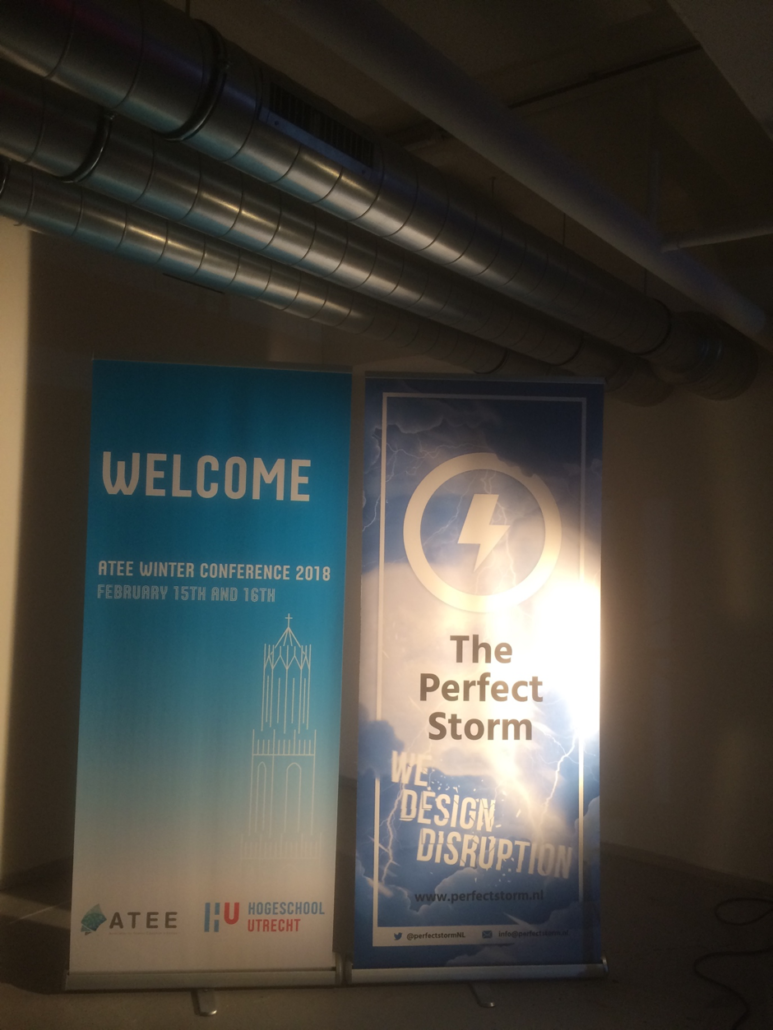
EDiTE at ATEE Winter Conference 2018

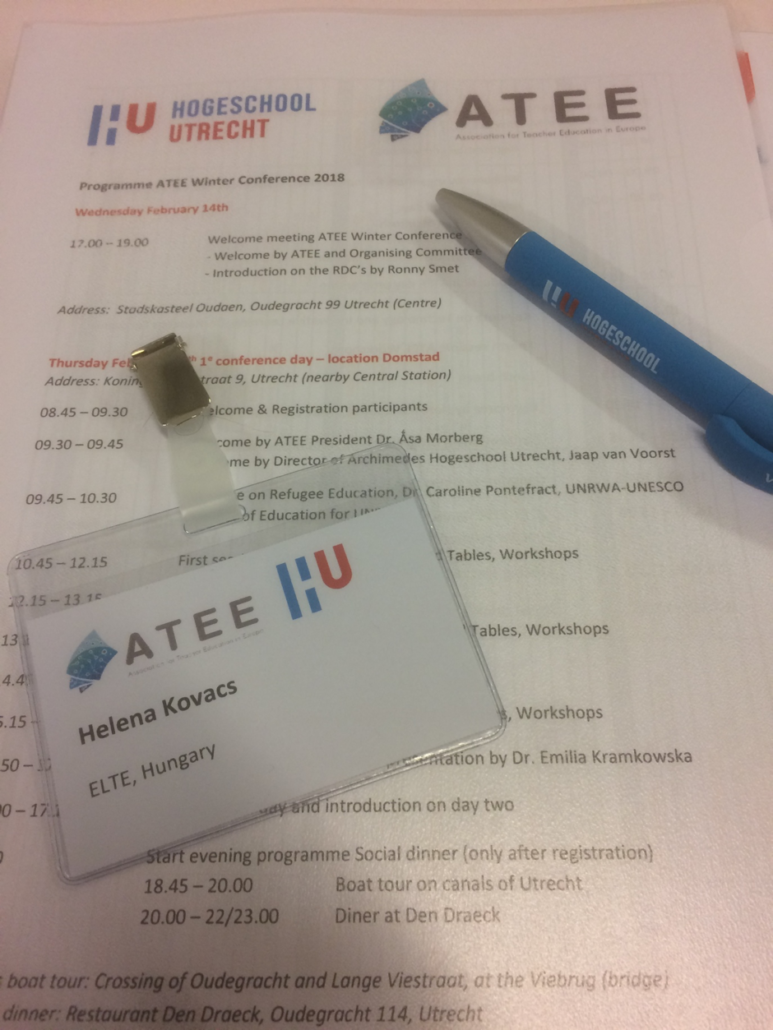
Association for Teacher Education in Europe (ATEE) in collaboration with the host university Hogeschool Utrecht has organised this year’s Winter Conference under the theme Technology and Innovative Learning. The conference took place on 15-16 February in Utrecht and has truly provided a glimpse of the potential of disruptive innovation in education sector.

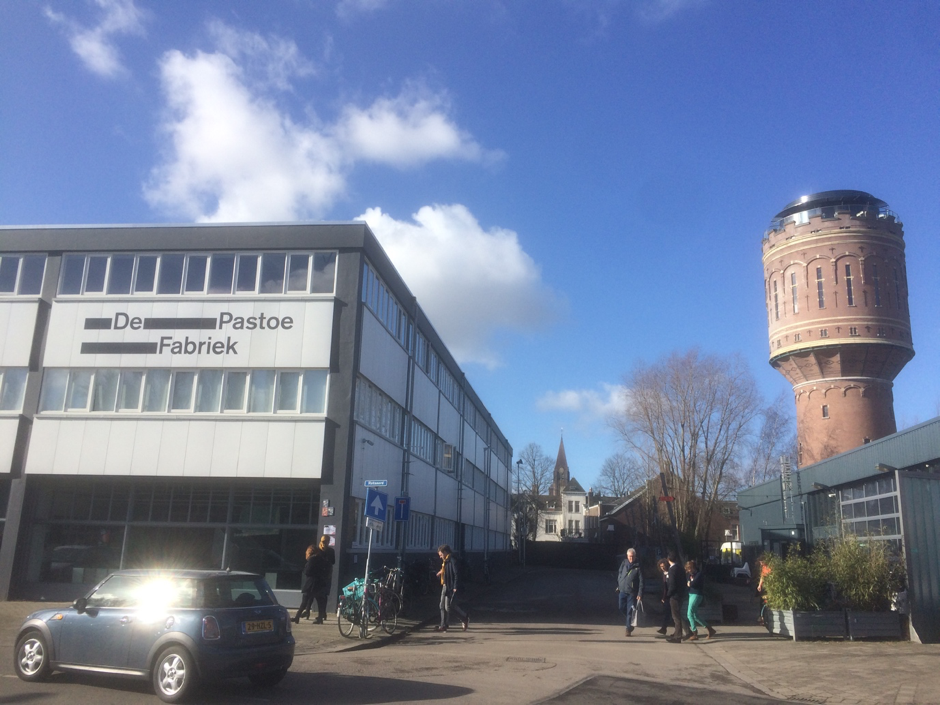
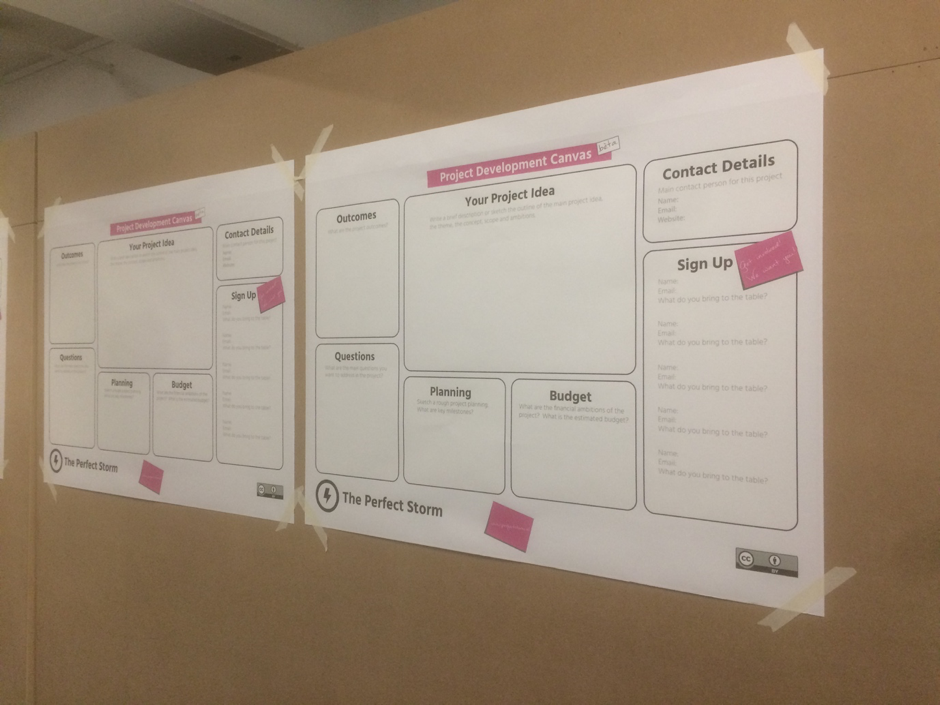
The first day of the conference featured a number of amazing keynote speeches, including the presentation of Dr. Caroline Pontefract on essential work of the UNRWA-UNESCO in zones most in need of quality education. The second day offered a truly disruptive feeling to the conference, as the organisers partnered with the Perfect Storm conference that aimed at creativity, design thinking and learning. The programme provided a mix of inspiring speeches, such as the one of Dr. Rebecca Ferguson the lead author of the Innovating Pedagogy reports and senior lecturer at the Open University, as well as Ewan McIntosh, the force behind the NoTosh platform. Most significantly, the second day of the conference took place in the creative and innovative working space of the Perfect Storm group settled in an old refurbished furniture factory. The venue itself was unusual setting for an academic conference, one such that hits the point of innovation in education and inspires waves of creativity and disruption.

Our early-stage researcher, Helena Kovacs, was there to represent EDiTE and to talk about her research findings in relation to teacher learning in innovative schools in Portugal. The presentation provoked a discussion not only related to specific learning potential in innovative schools, but also about the necessity for it, as well as the preparedness of teachers and teacher education institutions to actively deal with it.

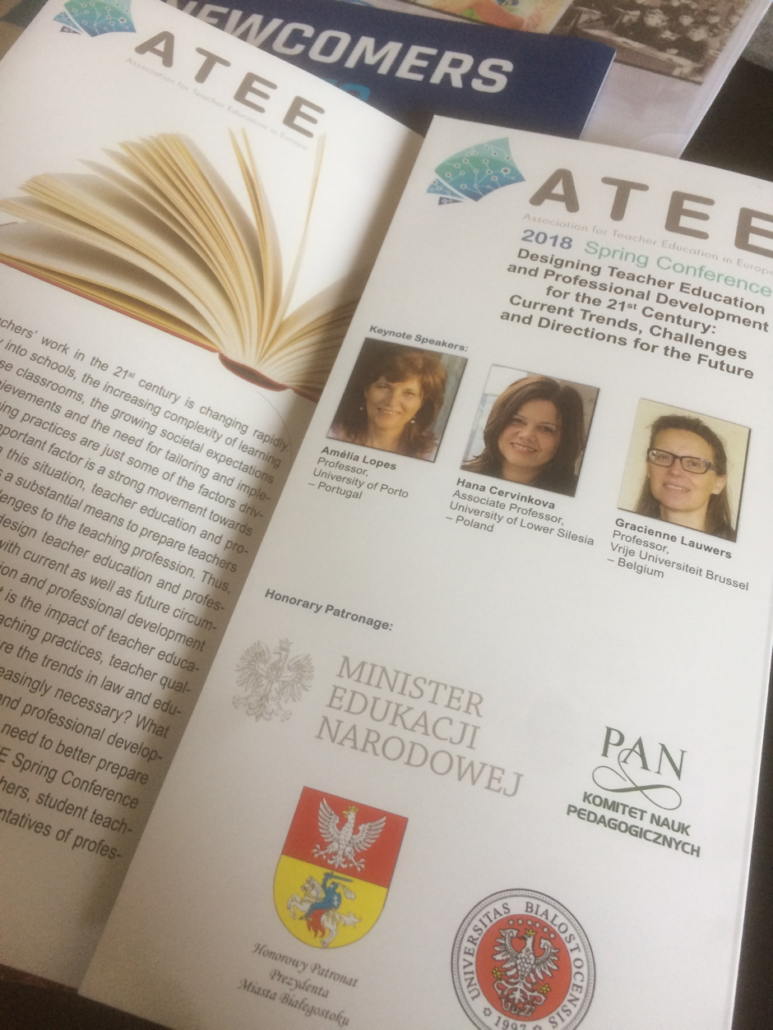
Next on ATEE conference agenda is the Spring Conference in Bialystok (Poland) from 7-9 June with the overarching topic of Designing Teacher Education and Professional Development for the 21st Century: Current Trends, Challenges and Directions and the Annual Conference in Galve (Sweden) from 20-22 August with the main theme A Future for All – Teaching for a Sustainable Society. It is worthwhile mentioning that the Spring Conference in Poland will also feature Hana Červinková, the programme director of the EDiTE at the University of Lower Silesia. Call for presentations are currently open for both of these ATEE conferences.


Weaving the Threads of a Continuum: Teacher Education in Hungary from the Perspective of European Developments

This paper aims to examine to what extent and how teacher education in Hungary reflects contemporary European policy and research developments with regard to the continuum of teacher education, meaning the overarching unity of initial teacher education, induction, and continuing professional development. First, the paper examines European policy documents to identify patterns and themes related to the continuum concept. Based on the specific analysis, a framework was developed to explore the continuum of teacher education and this was employed in the case of Hungary. Drawing from a content analysis of official documents and in-depth interviews with national policy experts and teacher educators as well as focus groups with teachers, the paper continues by analysing the development of teacher education in Hungary from the introduction of the Bologna reforms in 2005 to the restoration of undivided initial teacher education in 2012 and the implementation of a new system for the teacher career path in 2013. The findings indicate that while Hungary has adopted several structural elements related to the continuum which reflect European thinking, a lack of interconnections among the different phases of teacher education is apparent.

Newsletter Issue 3

[embeddoc url=”http://www.edite.eu/wp-content/uploads/2018/02/EDiTE-Newsletter-Issue-3.pdf” download=”all”]

The third issue of the EDiTE newsletter, published on 31 January 2018

229008_slider-istock_000017949870large1

Call for Papers: Back to Reality – Mapping the Crossroads between Theory and Practice in International Teacher Education Research


In a cooperation between EDiTE and NAFOL, we’ve announced a new opportunity for publishing in the forthcoming conference book: Back to Reality – Mapping the Crossroads between Theory and Practice in International Teacher Education Research. This publication is aimed to showcase a large diversity of educational issues with a particular focus on how they reflect on the educational realities, in classrooms, kindergartens, schools, universities, policy-making bodies, and other places where educational practice happens. With this book we would like to provide an understanding what research means for practice and what are the practical recommendations generated from our research endeavours.
The book is prepared in collaboration with the Norwegian National Research School in Teacher Education (NAFOL) and it aims at bringing together academic input from early-career researchers working on a wide array of issues related with educational research and practice. We welcome contributions which have the potentiality to interpret the (dis)connection and map the crossroads between educational research and practice.

This book is matched and married with the EDiTE-NAFOL 2018 Conference in Budapest and as such is specifically devoted to the works of researchers at their early stage of careers. Both the conference and the book focus on showcasing the research potential of the next generation of researchers and the valuable insights they can bring to the table in their respected educational fields. It is at the highest principle of EDiTE and NAFOL to support the applicative powers of research hence this book offers space for topics that embrace development and testing of new practices, research with practitioners, policy and practice research that hold valuable insights to future of policy-making, as well as evidence-based research implications for practice.

Please have a closer look at the Call for Papers and the requirements, and in case there any questions do not hesitate to contact us at submission@edite.eu.

[embeddoc url=”http://www.edite.eu/wp-content/uploads/2018/02/EDiTE-NAFOL-book-CfP-2.pdf” download=”all”]