EDiTE at the German School Awards

EDiTE coordinator, supervisor and professor Michael Schratz and EDiTE-ESR Malte Gregorzewski participated in the ceremony of the German School Award on 14 May. The award was launched in 2006 by the Robert Bosch Foundation and the Heidehof Foundation to honour educational achievements and help make them usable to improve the quality of schools across Germany and in German international schools. The competition is based on six quality criteria: academic achievement, approach to diversity, quality of instruction, responsibility, school culture, and school development. Amongst his many duties Michael Schratz serves as the spokesman of the jury, while Malte Gregorzewski, besides working on his PhD-thesis about Leadership for Learning, is part of the Innsbruck-based research group which conducts case studies about selected schools awarded with the German School Award, led by Michael Schratz.

Altogether 15 schools were nominated for the 2018 German School Award and invited to attend the award ceremony in Berlin on 14 May with a delegation of students and teachers. Anja Karliczek, the Federal Minister of Education and Research, presented the award at the event in Berlin. The jury nominated Evangelische Schulzentrum Martinschule in Greifswald as a winner of the 2018 German School Award, which includes a prize of 100,000 euros. Apart of the winner, the top five schools received a prize of 25,000 euros (Gesamtschule Bremen Ost, Franz-Leuninger-Schule in Mengerskirchen, Integrierte Gesamtschule Hannover-List, Annette-von-Droste-Hülshoff-Gymnasium in Münster, and the Matthias-Claudius-Schule in Bochum). All nominated schools that have not been awarded receive a recognition prize of 5,000 euros. Nevertheless, being among 15 selected for the award means that the schools will benefit from the German School Award development programme, and will receive individual process support and participation in seminars over the next two year. Read more here.

kinley ISfTE

EDiTE at ISfTE in Japan


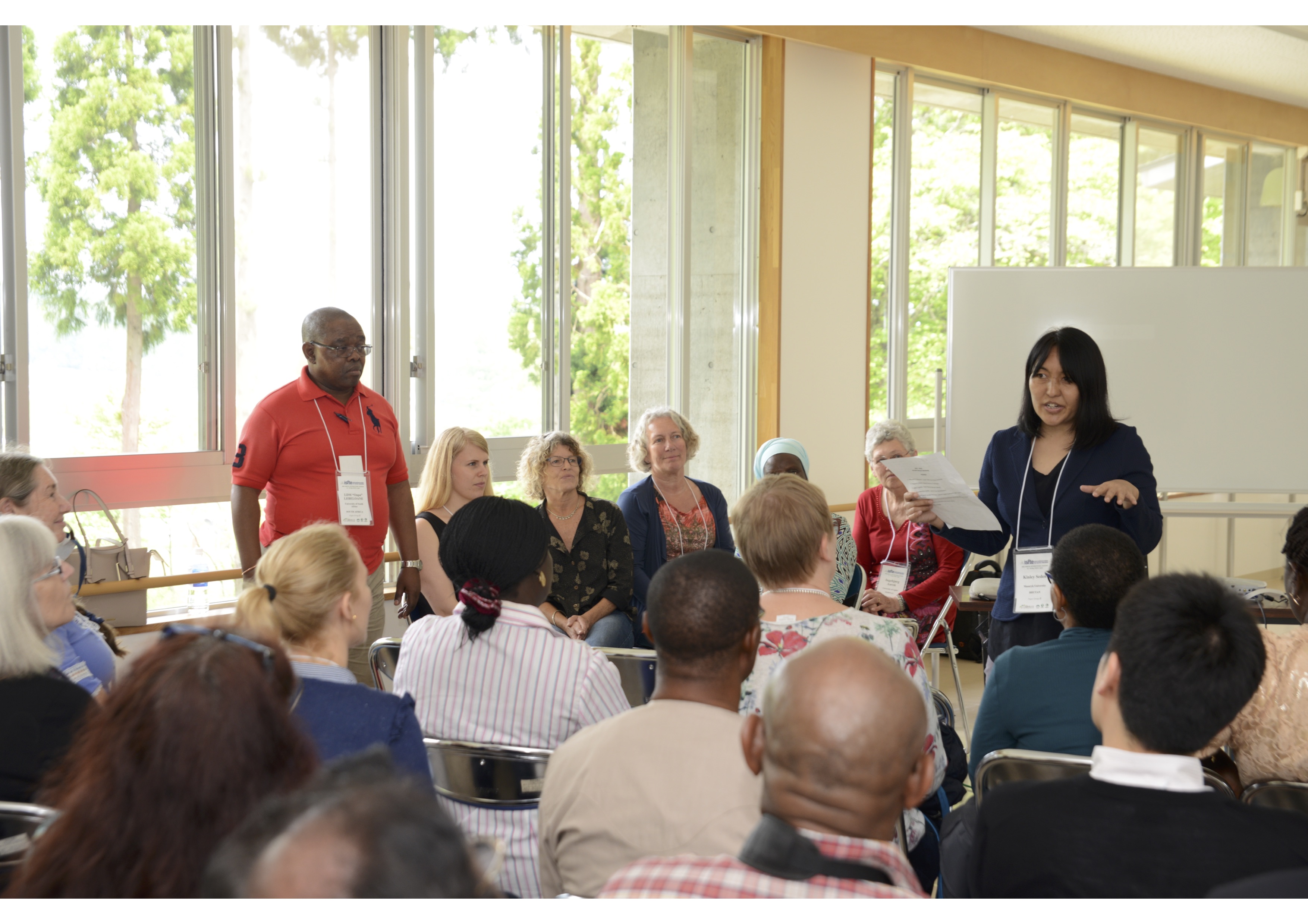
The 38th Annual international seminar of International Society for Teacher Education (ISfTE) happened last week in Japan from 13 to 18 May, hosted by Joetsu University of Education. The main participants of the conference were teacher educators, researchers and associated professionals, among which also Kinley Seden representing EDiTE and providing insights into her research findings.

The theme for the conference was Teacher Education in the Post Nation State Era: Education for welfare instead of warfare. The conference allowed groups to explore on critical global educational issues from a broad perspective by keeping the local challenges at the forefront during the discussions. It also enabled group to discuss on research findings and paper that are still in progress.

One of the unique trend of ISfTE’s was its small working group engaging in intensive dialogue following the papers offering feedback and suggestions to each paper within the working group. The essence of such platform was to improve the overall aspects of papers. During the conference, the first 2 days was spent on reading the group members papers and the third day was spent on presenting what each of the member expects from their members on the paper followed by critical and intensive dialogue on it. And during the final day, each group had to work on a way to present the final discussions capturing the essence of the whole group’s paper.

Kinley, who engaged in all activities throughout, had a very active role in one of the groups in staging a roleplay and facilitating knowledge from the group through their active engagement. She emphasized her group’s common theme as “active learning” wherein she briefly explained that the educators from all walks of life are expected to translate learning into action with assessment assessing learning rather than testing knowledge and by involving student in the assessment process. She also highlighted that the decolonization of curriculum should be done following a bottom up approach rather than top down and it should be deconstructed by the students. As the theme of the group was active learning, the presentation was ended with the note: “Teachers should do less of talking and more of doing in the classrooms.”

Kinley had the chance also to share information about EDiTE and discussed about the EDiTE project with the conference participants. Her biggest accomplishment from the conference was networking and finding expert in her research area who promised to render their support and feedback to better her research work. She looks forward to collaborating with these experts.

kinley japan kinley ISfTE

Picture1

EDiTE at JustEd18 conference on „Promoting Justice Through Education”

EDiTE researcher, Nikolett Szelei, presented her study at the JustEd18 conference in Helsinki, 22-23 May 2018. The „Justice Through Education in the Nordic Countries” is a research network within the Nordic Centre of Excellence that promotes research with the overarching theme of understanding how systems, cultures and actors in education enable and constrain justice. The JustEd18 conference specifically focused on areas of changing conceptualizations of justice in education, educational practices for social justice, marketisation effects on education, multiple diversities in education, politics and policies for justice in education and related research methods. Nikolett presented parts of her EDiTE PhD research, showing classroom examples on how pre- and primary school teachers in urban Portugal introduced ’cultural activities’ in the classroom, and how students were positioned in certain discourses around cultural divesity. Applying the lenses of critical multiculturalism, Nikolett argued for engaging with student voices in order to counteract those (mis)repsentations, as well as for a change in how teachers operationalised the concept of ’culture’. Nikolett also raised the importance of working with teachers in the classroom in order to reach such visions.

Picture1

Nikolett presented at JustEd2018

EDiTE at TEPE2018

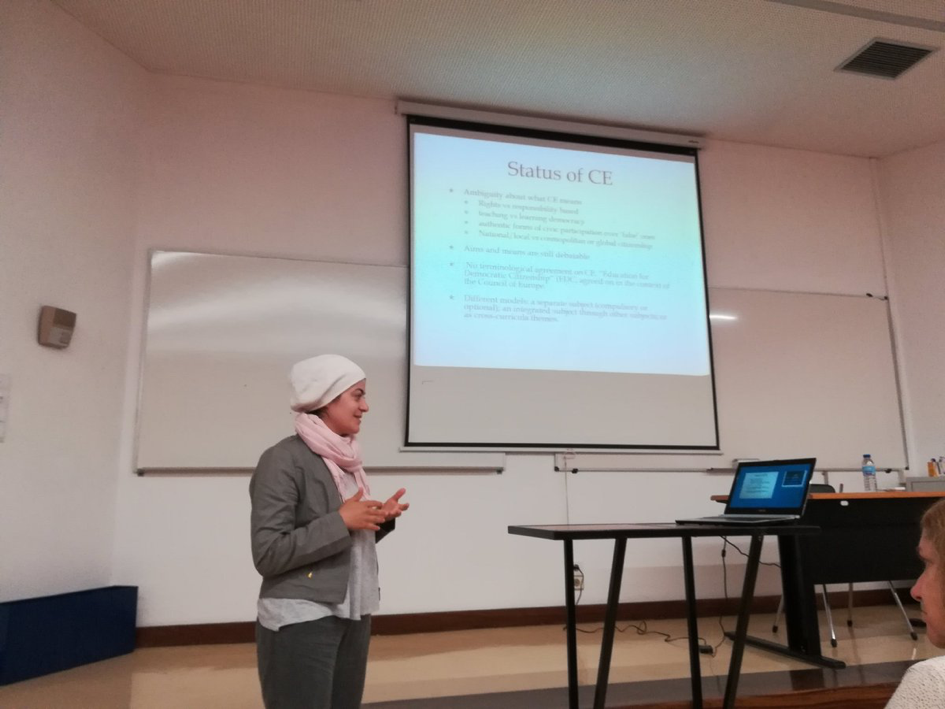
The Teacher Education Policy in Europe (TEPE) organisation held its annual conference on 17-19th May 2018 in Braga, Portugal at the University of Minho under the theme „Recruiting the Best Teachers: Policy, Pedagogy and Professionalism”. The network specifically aims at advancing research in teacher education, increasing mobility and extending the European dimension in teacher education and improve the quality of teacher education through the renewal of evaluation cultures. TEPE2018 was a platform for various members of the EDiTE network to actively engage with a larger academic audience: EDiTE researchers, supervisors and scientific advisory board members presented the many projects they are currently involved in independently, or with researchers from other networks. As the conference took place in Braga, Portugal, it was a particularly relevant event for the EDiTE Lisbon team to share findings from Portugal and discuss the implications with researchers from other countries, reflecting together on transnationally emerging patterns in current educational systems. Shaima Muhammad discussed parts her PhD thesis on „Teaching the ’good’ citizen in a diverse classroom: teachers’ conceptualization and approaches to citizenship education in Austria and Portugal”. Furthermore, Nikolett Szelei and Inês Alves presented their joint work on “The missing link: teacher learning for diversity in an area based intervention in Portugal (TEIP)”. EDiTE members enjoyed the fruitful discussions and insightful presentations of TEPE2018!

Picture1

Shaima Muhammad presenting at TEPE2018

Picture1

Lecture About Education in Turkey by Professor Vesife Hatisaru

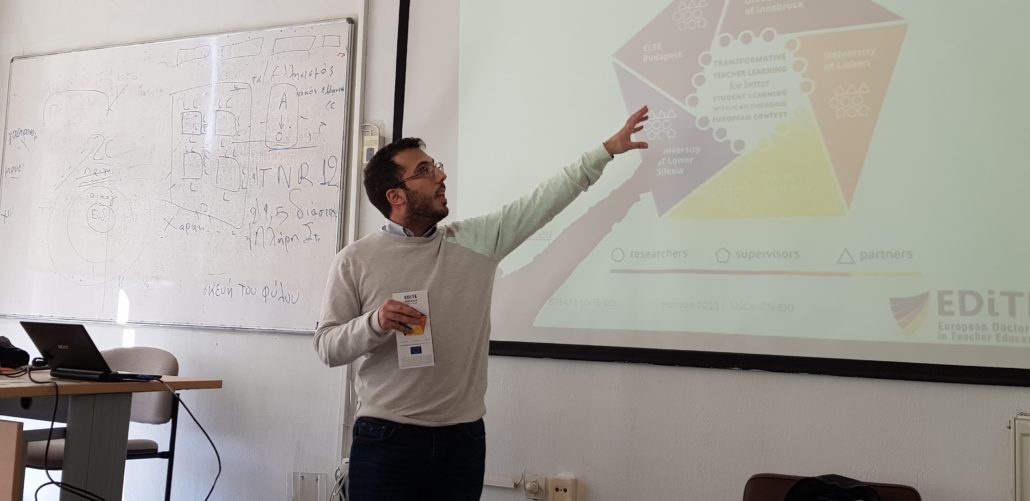
EDiTE team at the University of Lisbon has been delivering a course this semester called Educational issues in Europe. Last week the course team had the opportunity of inviting a colleague from Turkey, professor Vesife Hatirasu, who is a member of Erasmus+ programme and a professor at the Faculty of Education of University in Ted.

The lecture was an interesting event for everyone involved; for EDiTE researchers who deal with questions and comparisons of education systems across the Europe in their daily work, as well as for the course students – who were able to get acquainted with the perspectives of education in a large European country, often in trouble and conflict.

Vesife Hatirasu presented a predominantly critically perspective of the possibilities of education in her country, by using a reflective method and pointing out to similarities of the classroom setting where participants are not only Portuguese but Erasmus students from four other countries. Meanwhile, she also mentioned pathways of private education in Turkey, which seemed to be very popular in the country and the students were keen to understand the scope of this. This was brought into the lesson together with other pros and cons of the educational provisions in Turkey.

Furthermore, Vasife showed the results of different international researches, in particular on mathematical literacy and key knowledge and skills that are essential for full participation in modern societies. There was a discussion about the country’s outline in adult competencies (PISA 2015) that raised a question on what the consequences of such an outline are on current work of schools.

Perhaps one other specific topic that was of great interests for everyone was the topic of initial teacher education in Turkey. Through a quick classroom comparison, the situation seemed to be similar to the majority of European countries: teacher education takes four years and it is implemented as an undergraduate education. Prospective school teachers are required to earn a bachelor degree from a department of education as well as to achieve a the required minimum score on the public servant selection examination. Upon successful completion of this first phase, the graduates are appointed by the Ministry as trainee teachers. After one year, trainee teachers must pass another examination in order to become regular teachers.


Picture1

Power Hour on Effective Presentation Skills

Doing great research is often not enough in academia; being able to present valuable research results in both written and oral way has become an essential trait of the academic job. However, with more and more research done daily, leaving an impact on the audience is not as easy as it might seem. To address one of these aspects and provide space for practice and for exchange of knowledge, ELTE Technical Secretariat has organised a Power Hour specifically focused effective presentation skills.

Power Hour is a title of a series of workshops through which the domestic and international doctoral researchers at ELTE can engage and discuss on topics of interests, provide feedback and encouragement, and share valuable insights. Kinga Kaplar-Kodacsy is part of the ELTE EDiTE technical secretariat and is also in charge of organising workshops of Power Hour.

For the April workshop, ELTE’s early stage researcher Helena Kovacs was invited to provide a learning opportunity related to presentation skills. Organised in two consecutive Wednesdays (11 and 18 April), the workshop was developed with a plan to mirror the Falling Walls Lab Marie Skłodowska Curie event and offer the chance for the participants to work in real-time on pre-prepared presentations. The presentations had to provide the essential elements of research in just few minutes by drawing attention to the urgency and importance of the topic or by inspiring imagination with the audience. Helena who participated at the Falling Walls Lab event modified a few rules to fit the needs of the Power Hour workshop, thus the presenters had 5 minutes and the workshop did not have a competitive element but intensive learning element. Both presenters and the audience received a handy presentation preparation guide, which especially presenters used to generate few innovative ideas, such as for example using a metaphor of a bus to describe quality systems for educators. The feedback and knowledge generated in the sessions was empowering, and in the final stage the presenters received very detailed comments on their voice, diction, posture, movements and overall presentation content.


EDiTE at EURODOC Conference

EDiTE researcher, Beata Zwierzynska has participated at the annual EURODOC conference (http://www.eurodoc.net/conference-agm-2018) as a national representative of Polish Doctoral Association KRD. KRD is a non-profit organization established in 2005 representing obev 43000 Doctoral Candidates in Poland. Eurodoc is the European Council of Doctoral Candidates and Junior Researchers – a federation of 32 European national associations. It develops policies for early-career development, doctiral training, employment equality, interdisciplinarity, mental health, mobility, Open Science, and reseach integrity.
The Eurodoc Conference 2018: Research career – a living dream? is held in Finland at the University of Tampere. The sessions cover topics from Policy making and current situation of ECRs, developing doctoral training in Europe, career development and improving ECRs’ working conditions, mobility, and many more. Among the guest speakers there are representatives of European Commission, science Europe, Rectors, Eurodoc researchers, Doctoral schools directors, grant and funding institutions, and international networks. During the open discussions several important isues were raised so far: a need to return to a more diverse model of academic assessment instead of concentrating only on publicatins and impact factor, suporting researchers in their further carees and transerable skills, a need for supervisors’ training to work with early-career researchers, unclear meaning of Open Science notion, and a growing problem of researchers’ mental health and poor working conditions.
The conference will be followed by Eurodoc Annual General Meeting (AGM) with lectures, workshops, discussions, and elections for new board members and coordinators of Eurodoc Working Groups.

ELTE EDiTE Workshop

Eövös Loránd University EDiTE researchers participated as chairs and trainers in the workshop Step forward: Moving from theory to practice in EDiTE doctoral research that took place on April 5, 2018, in Budapest, Hungary.

“It was a very valuable workshop in which I got a lot of useful information that is not commonly passed on the daily basis,” said one of the participants.

This workshop organized by Taisia Muzafarova and Abdalhamid Alahmad brought together EDiTE researchers and Ph.D. students from several research areas of the Faculty of Education and Psychology.

The workshop addressed a number of specific issues necessary for successful completion of the programme, namely, complex examination, writing and submitting research proposal, and publishing research articles. The event was targeted to benefit a new cohort of ELTE Ph.D., doctoral programme students and served as a platform for active dialogue between the students and programme professors and administrators. The students had a chance to get an insight into administrative procedures, as well as gain knowledge from senior colleagues.

“It was rewarding to share two years of doctoral experience with our colleagues and share our inquiries for the next phase of the programme with administrators and professors,” said Abdalhamid Alahmad, one of the organizers.

Newsletter Issue 4

[embeddoc url=”http://www.edite.eu/wp-content/uploads/2018/02/EDiTE-Newsletter-Issue-4.pdf” download=”all”]

The fourth issue of the EDiTE newsletter, published on 30 March 2018

Lecture on European Trends in Teacher Education

On 28 March 2018, our ESR Vasilis Symeonidis was invited to give a lecture for MA in Educational Sciences students at the Department of Education, University of Western Macedonia (UOWM) in Greece. The lecture dealt with the topic ‘European trends in teacher education: The cases of Austria and Hungary’ and was attended by 25 teacher education students. The students were introduced to main theories regarding European integration, themes of European teacher education, and relevant teacher education reforms in Austria and Hungary, followed by discussion with strong comparative education elements.

During this visit, our ESR Vasilis Symeonidis and Dr Vasiliki Papadopoulou, Professor of School Pedagogy, agreed on establishing an Erasmus+ staff mobility agreement between the University of Innsbruck and the University of Western Macedonia, further strengthening the collaboration between the two institutions for the period 2018-2021.